

 Tiếng Việt
After a period of continuous market volatility driven by rising costs, supply chain disruptions, and shifting consumer behavior, the manufacturing industry is showing clearer signs of recovery and growth in 2026. Many domestic and international businesses are returning to plans for expanding production capacity, upgrading operations, and increasing investment in factory systems as a strategic move to seize opportunities in the market’s new development cycle.
As the global economy gradually rebalances, manufacturing continues to be regarded as one of the most essential sectors for economic growth, trade, and industrial value chains. Beyond simply producing goods, manufacturing today has become a foundation that enables businesses to increase autonomy, strengthen competitiveness, and build more sustainable long-term development models.
Growth Momentum Is Returning Strongly
One of the key drivers behind the renewed growth of the manufacturing sector at this stage is the gradual recovery of market demand. As consumption becomes more stable and trade activities regain momentum, many businesses are reporting improvements in orders, supply demand, and production expansion capacity.
At the same time, companies are becoming more proactive in restructuring their manufacturing operations to adapt to the new market environment. If the primary goal in the past was simply to maintain operations, many businesses are now shifting toward a growth acceleration mindset, focusing on factors such as improving production efficiency, optimizing costs, standardizing processes, and making long-term investments in operational systems.
This transformation is creating a new wave of growth in the manufacturing industry—driven not only by market demand, but also by the internal strength and determination of businesses to evolve.
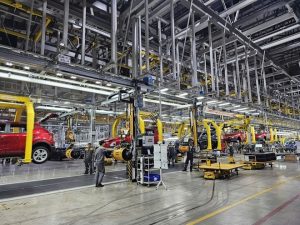
Manufacturing Is No Longer Just an Operational Function
In the modern business environment, manufacturing is no longer seen as a department that merely performs the function of producing goods. Instead, it has become a strategic capability that directly influences product quality, market responsiveness, supply chain efficiency, and business scalability.
Businesses with a strong manufacturing foundation enjoy greater advantages in quality control, reduced external dependence, and the ability to build more stable growth models. This is especially important in an increasingly competitive market, where differentiation comes not only from the product itself, but also from the ability to organize and manage the entire system behind that product.
For this reason, investing in manufacturing today is not only about expanding scale—it is also a way for businesses to strengthen internal capabilities, improve autonomy, and lay the groundwork for long-term development.
Investment in Factories and Production Capacity Is Increasing
Alongside the broader growth momentum of the market, the trend of investment in manufacturing is becoming increasingly visible. Many businesses are choosing to develop or upgrade factory systems as part of a broader strategy to expand their operational ecosystems, rather than relying solely on external manufacturing partners.
Proactively investing in production capacity allows businesses to gain better control over critical factors such as quality, timelines, operational standards, and product development flexibility based on market needs. This is also an important step toward enhancing business value, especially as investors and partners increasingly appreciate models with clear, well-established operational foundations.
In addition, owning or developing manufacturing facilities also opens up new opportunities for businesses in areas such as partnership expansion, contract manufacturing, product development, and deeper participation in the industry value chain.
Manufacturing Growth Is Closely Linked to Innovation and Specialization
A notable feature of the current growth phase is that businesses are no longer focusing solely on “producing more,” but are shifting toward the goal of producing better, more flexibly, and more efficiently. This is an important transformation, indicating that the manufacturing industry is entering a new stage of development—one in which growth must go hand in hand with quality and specialization.
Businesses are increasingly paying attention to building well-structured manufacturing models, investing in operational systems, improving coordination across departments, and enhancing resource efficiency. Instead of pursuing scattered expansion, the current trend is to focus on core capabilities that can generate sustainable competitive advantages.
This also means that manufacturing businesses in the coming period will require stronger preparation in terms of strategy, resources, and management mindset if they wish to fully capitalize on the growth opportunities now emerging.
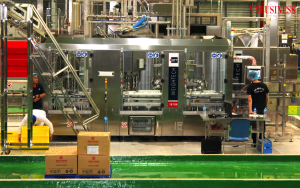
Vietnam Continues to Be a Highly Promising Market for Manufacturing
Within the region, Vietnam continues to be recognized as one of the most promising markets for manufacturing development in the medium and long term. With advantages such as a strategic geographic location, an improving investment environment, a young workforce, and the ongoing shift of global supply chains, Vietnam is attracting increasing attention from businesses and investors in the industrial and manufacturing sectors.
In addition, rising domestic demand, more dynamic trade activities, and the development of related sectors such as logistics, distribution, investment, and commerce are also creating more room for the continued growth of the country’s manufacturing industry.
These conditions create a favorable environment for businesses with long-term strategies to accelerate investment, strengthen manufacturing capabilities, and gradually enhance their market position.
ART NATURE and Its Development Direction in Line with the New Manufacturing Trend
In response to these positive market signals, ART NATURE has identified the factory and manufacturing sector as one of the key pillars in its corporate development strategy. With a sustainable development mindset and a long-term vision, ART NATURE continues to build its manufacturing foundation in a more structured, professional, and market-responsive direction.
Investing in and developing manufacturing capacity not only helps ART NATURE increase operational autonomy, but also creates a stronger platform for the company to expand collaboration opportunities, enhance internal value, and reinforce its role in the modern business development chain.
As the manufacturing industry enters this new acceleration phase, ART NATURE sees this as a crucial moment to further strengthen its internal capabilities, seize emerging opportunities, and grow more powerfully in the years ahead.
A Positive Outlook for the Next Stage of Development
The growth of the manufacturing industry is not only a positive signal for the economy, but also opens up many strategic opportunities for businesses seeking sustainable pathways in the next phase of development. Companies that know how to invest in the right priorities, build strong operational foundations, and grow with depth and specialization will be the ones with greater advantages in the competitive landscape ahead.
Throughout this journey, ART NATURE continues to position itself as a company aligned with modern development trends—continuously strengthening its manufacturing capabilities and steadily contributing to the creation of sustainable value for the market.